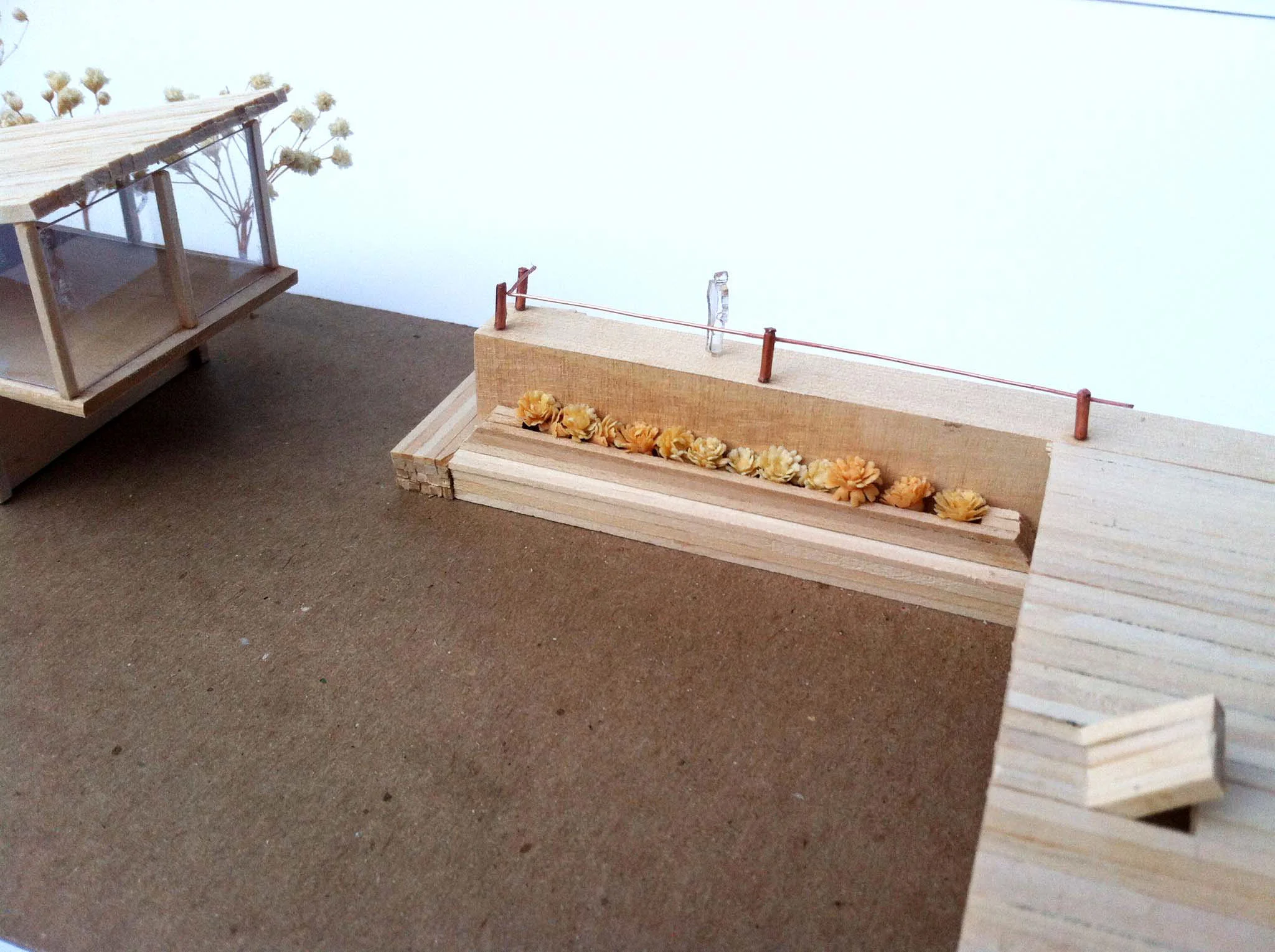
Plant Gallery
Baton Rouge, Louisiana, 2014
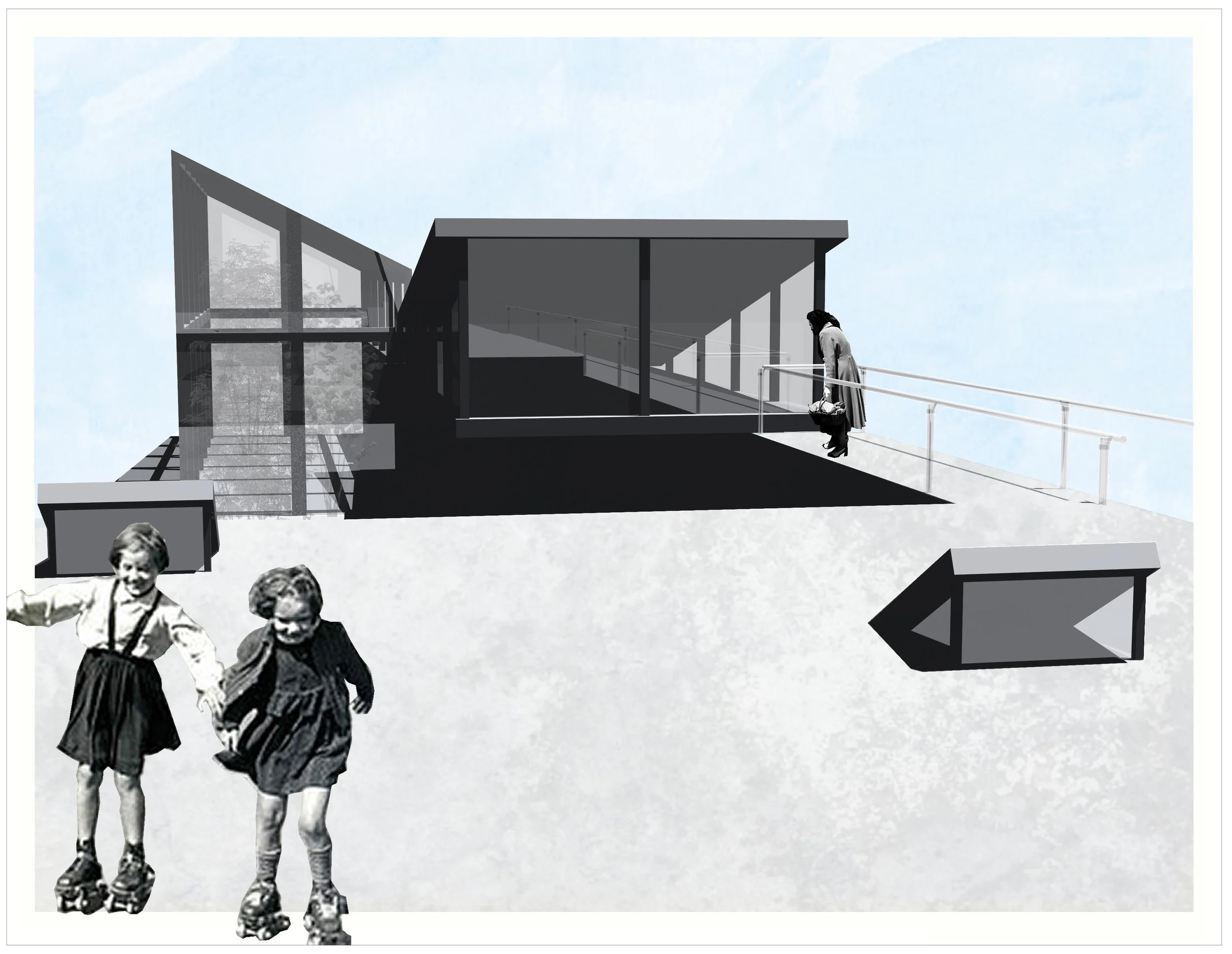
Perspective looking toward greenhouse
This design looks to acknowledge and reconcile voids left when space is left uncared for, and forgotten. The loudness of the vacancy on this project site is juxtaposed on West Chimes Street by many buildings and businesses that have been rooted in the neighborhood for a very long time, strengthening the neighborhood as a community. These businesses—a book store, a sandwich shop, a small local pub, and a coffee house—precede the project site as a pedestrian processes down Chimes Street.
Aside from the buildings mentioned, most other retail spaces along Chimes Street have faced repeated turnover, contributing to a more transient feel in the neighborhood.
The constant variable among the long-lasting tenants was their strong connection with the neighborhood residents and local community.

Site Plan
It was clear that the project site needed to acknowledge the communities around it. There was a loud emptiness in the site that echoed the lack of engagement between three particular neighborhoods surrounding the site. These were the communities which the project would aim to engage.
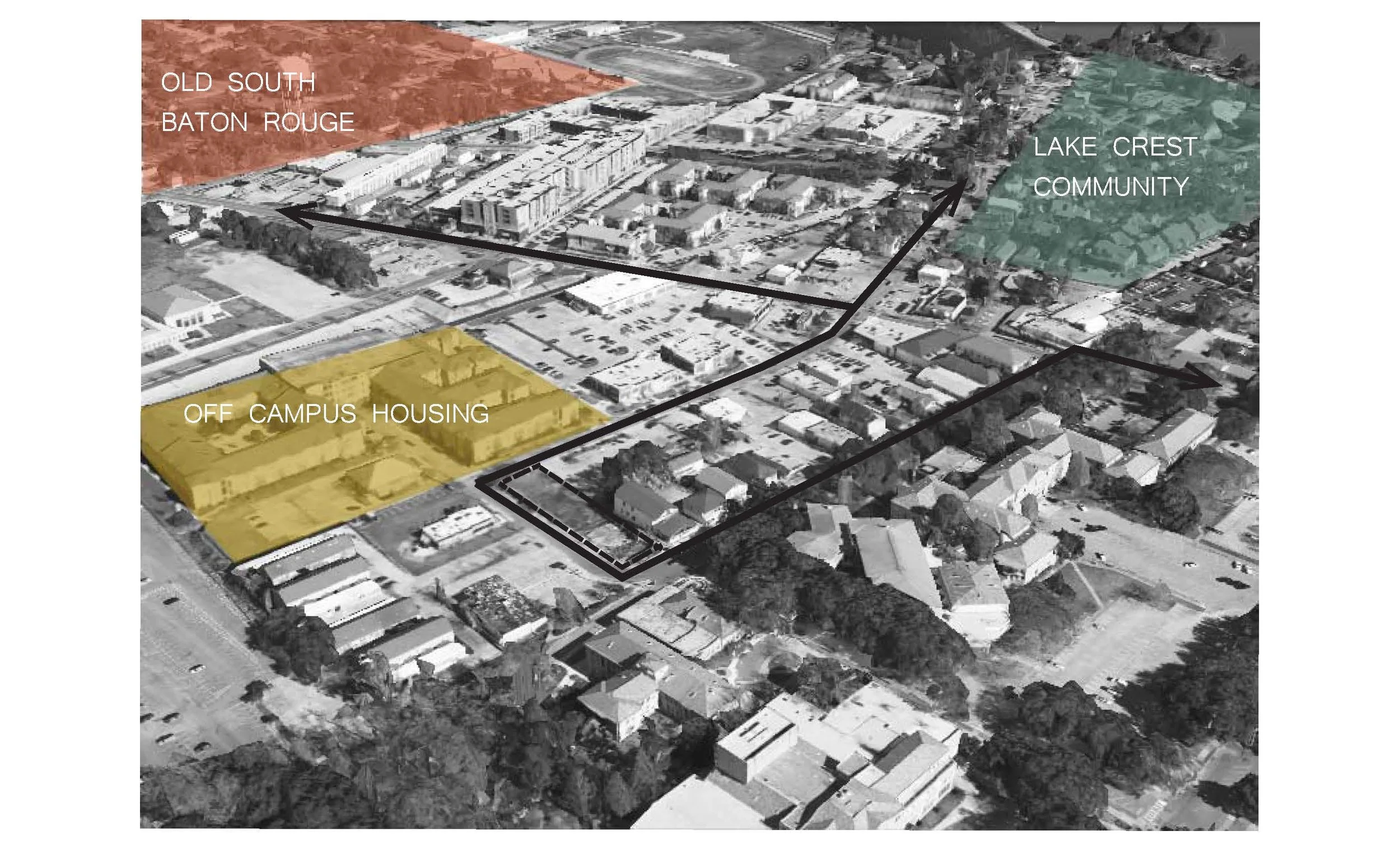
Diagram highlighting communities the site is designed to serve
Closest to the site is a cluster of apartment complexes housing mostly LSU students and faculty, as the site is located just off campus.
A few blocks north is a series of residential neighborhoods often referred to as "Old South Baton Rouge." This part of town is known for its lower income residential neighborhoods. Vastly overlooked is its thick cultural history. A handful of the beloved home-style restaurants near LSU’s campus are owned by elderly women in Old South Baton Rouge. A number of the elders grow their vegetables in community gardens on the abandoned lots next-door to their homes. However, as LSU’s campus sprawls into this neighborhood, the neighborhood dynamic is at risk.
The project site is also in close proximity to the Lake Crest neighborhood, which is made up of high-income single family homes surrounding the LSU lakes, which are man-made lakes commissioned by former Louisiana Governor Huey P. Long in order to keep Southern University, a predominately black university, from building its campus near LSU.
It would not be realistic to say that these three communities will eventually dissolve into one another, much less that this could be facilitated through one building. But a public gallery which targets these three societal constructs specifically could be a nudge toward a more co-mingled Baton Rouge.

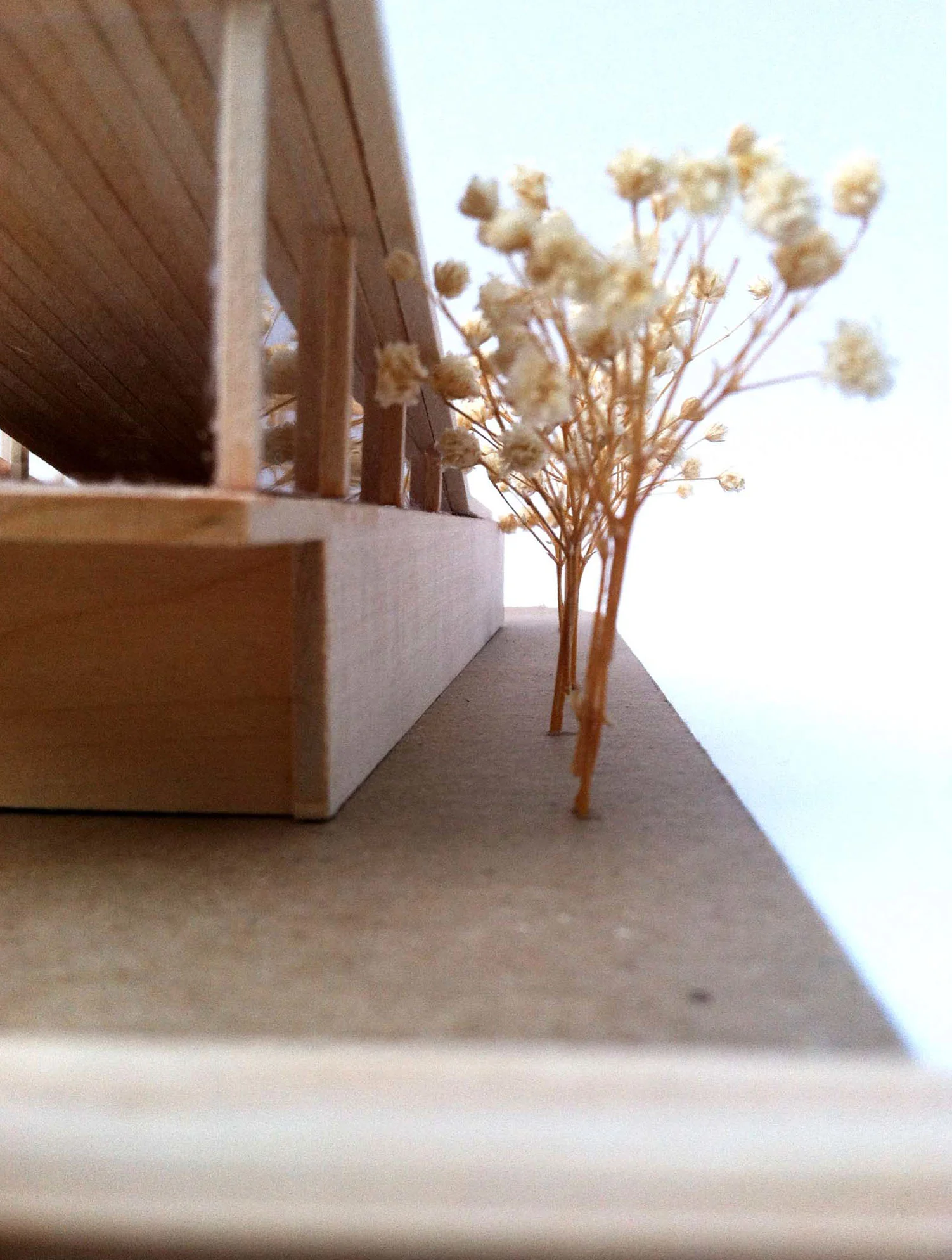
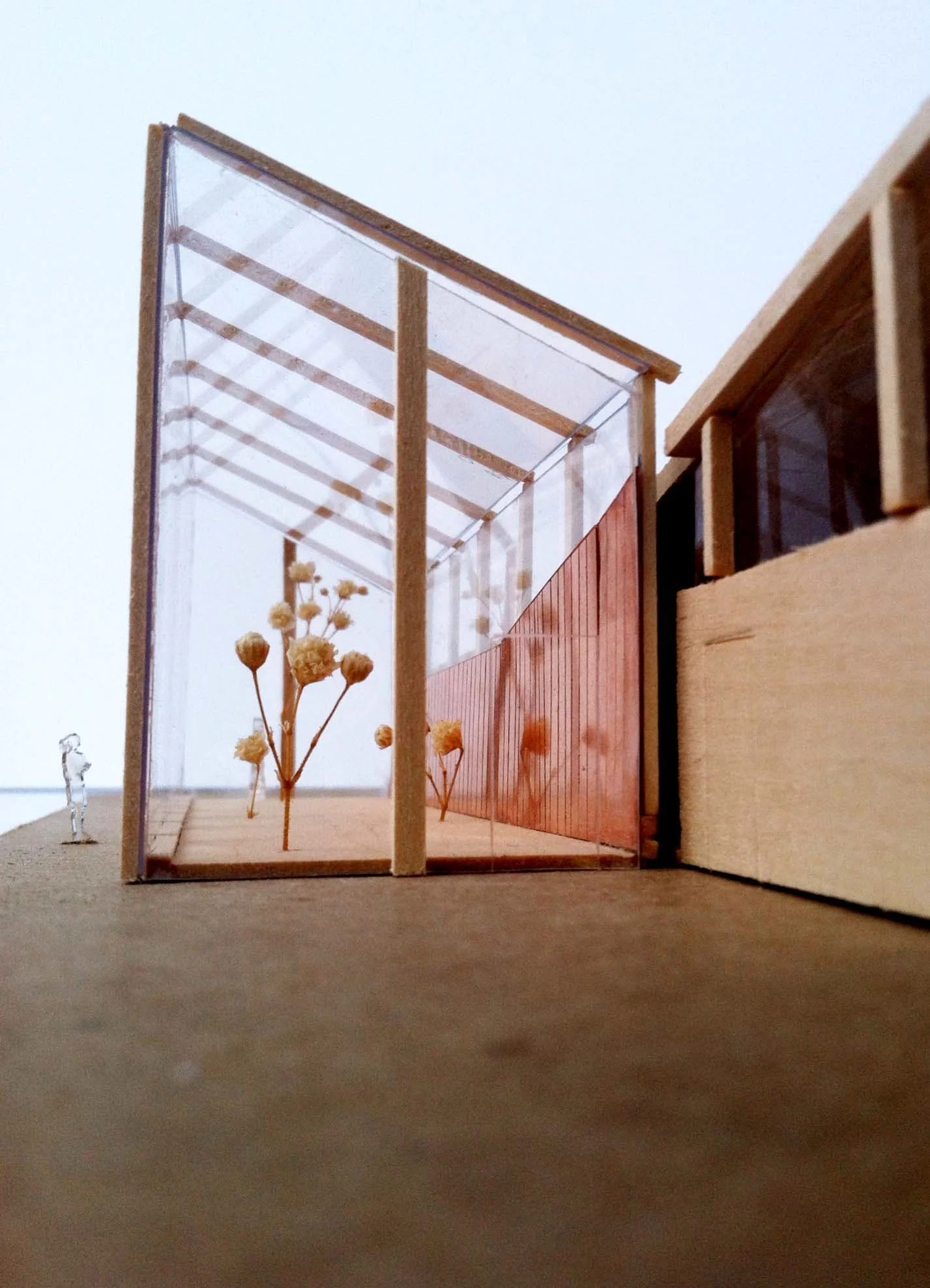
This site would house two structures. Most prominently on the site would be a greenhouse. This would serve as a place for college students passing by to watch and understand where their local foods are coming from. It would also serve as a place for the women of Old South Baton Rouge to continue gardening as property values rise in their community and the abandoned lots they garden on become developed. Lastly, it encourages those who live in the Lake Crest Community to visit and possibly buy groceries and help fund the gallery.
Attached to the greenhouse would be a work space for gardeners to store supplies, which would also provide shade, as well as conditioned space on the side to store and possibly sell harvested vegetables.
Lastly, there would be a space for a small exhibition gallery, including a wood-decked roof on which people can walk and look down into the greenhouse and the rest of the site. This gallery could house art made by locals in order to celebrate the resilience of Old South Baton Rouge.
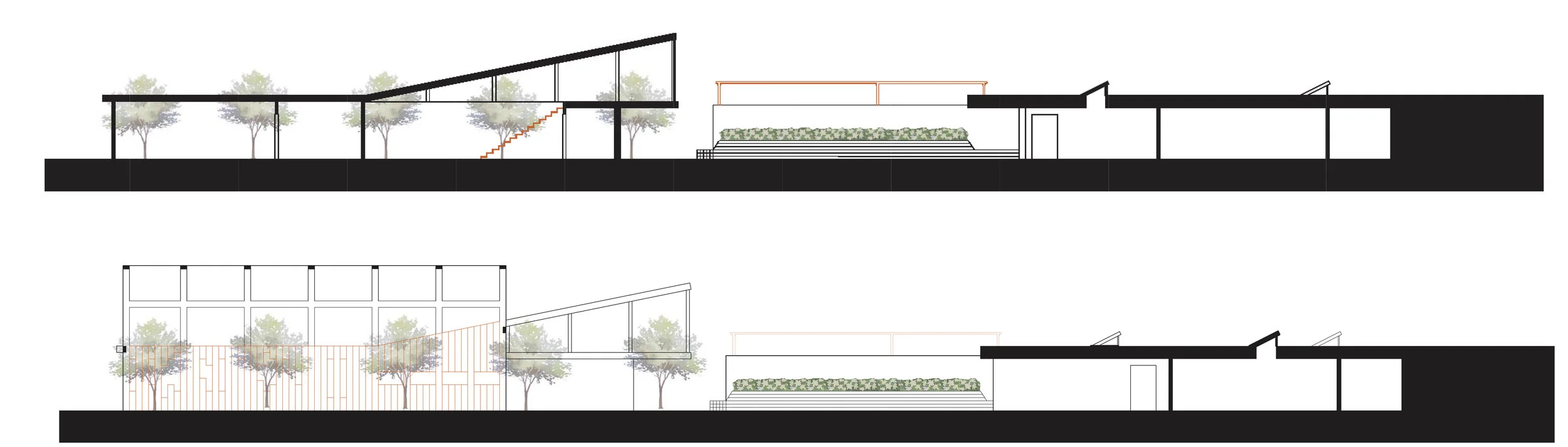
Longitudinal Sections